
The finance ministry has suggested forming a GST council, headed by the Union finance minister, to address disputes between the Centre and the states in the proposed GST regime.

With less than a year left for the scheduled introduction of the Goods and Services Tax (GST), most states have increased their VAT (value-added tax) rates. The move is seen as an attempt to extract better compensation from the Centre for loss on account of GST rollout
The annual Finance Bill may soon become far less exciting as the government plans to lift the veil of secrecy surrounding tax proposals in Budget. Once the Direct Taxes Code (DTC) and Goods and Services Tax (GST) are in place, the finance ministry will adopt a public discussion approach for most future decisions, while confining the annual exercise to a few procedural changes.

The Union finance ministry may have to battle it out in court with the sponsors of the Indian Premier League cricket tournament to make them comply with its service tax payment demands.

With recent issues from state-run companies receiving lukewarm response from the markets, the government has downscaled its divestment programme this year, restricting it to a maximum of eight companies.

After failing to convince states to keep petroleum products within the ambit of the proposed goods and services tax (GST), the Centre has finally relented. It has agreed to the proposal of the empowered committee of state finance ministers to keep petroleum products like crude, motor spirit, aviation turbine fuel (ATF) and high-speed diesel out of GST.

A senior official in the finance ministry said the Central Board of Direct Taxes addressed the nine areas of concern in the Code identified by Finance Minister Pranab Mukherjee.
The government has taken the first concrete step towards the introduction of the goods and services tax.

The levy had to come into effect from April 1. It would now be in force from July 1.
Discounts for retail investors may become a part of the government's disinvestment policy, instead of being offered on a case-to-case basis. The discount offered could be up to 10 per cent of the issue price.
The government got Rs 9,930 crore from its follow-on offer of NMDC shares, leaving it short by Rs 1,448 crore for its year's disinvestment target of Rs 25,000 crore. In addition, it got about Rs 2.5 crore by way of interest income on the issue money from banks.

PSB may get its first non-Sikh at the helm, vigilance clearances are awaited.

The government would fall short of its target for direct tax collections for the second consecutive year, with the revenue department estimating its direct tax receipts at Rs 3,70,000 crore (Rs 3700 billion) for 2009-10.
Disinvestment proceeds of the government could be higher than the estimate of Rs 25,000 crore for 2009-10. The government has already raised Rs 13,621 crore through disinvestment in four public sector companies.Dilution of stake in National Mineral Development Corporation, the fifth public sector undertaking to come out with a public offer this year, is likely to fetch the government more than the remaining Rs 11,388 crore, thereby exceeding even the revised target.

In December last year, the finance ministry had asked five state-run banks -- Punjab National Bank, Canara Bank, Union Bank of India, Bank of Baroda and Bank of India -- to explore merger opportunities in the banking industry.

The government may take the first step towards fiscal consolidation in Budget 2010-11 by partially rolling back tax cuts given to the industry last year. The service tax rate may be restored to 12 per cent, while excise duty could be increased marginally.

The ministry of urban development has asked the finance ministry to lower the duty in order to promote the public transportation system in the country.
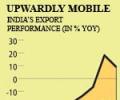
Although India's exports have started growing again after several months of decline, commerce ministry sources told Business Standard that the extension is being considered to sustain growth and stabilise it at 15 to 20 per cent.
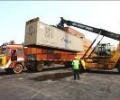
One of the most favoured duty reimbursement schemes among exporters - the Duty Entitlement Passbook (DEPB) scheme - is likely to be scrapped, as the government gears up to introduce the Goods and Services Tax (GST) from April 1.
The government may take the first step towards fiscal consolidation in Budget 2010-11 by partially rolling back tax cuts given to the industry last year. The service tax rate may be restored to 12 per cent, while excise duty could be increased marginally.
 © 2026 Rediff.com - Investor Information - Advertise with us - Disclaimer - Privacy Policy - Sitemap - Feedback - About us - Terms of use - Grievances